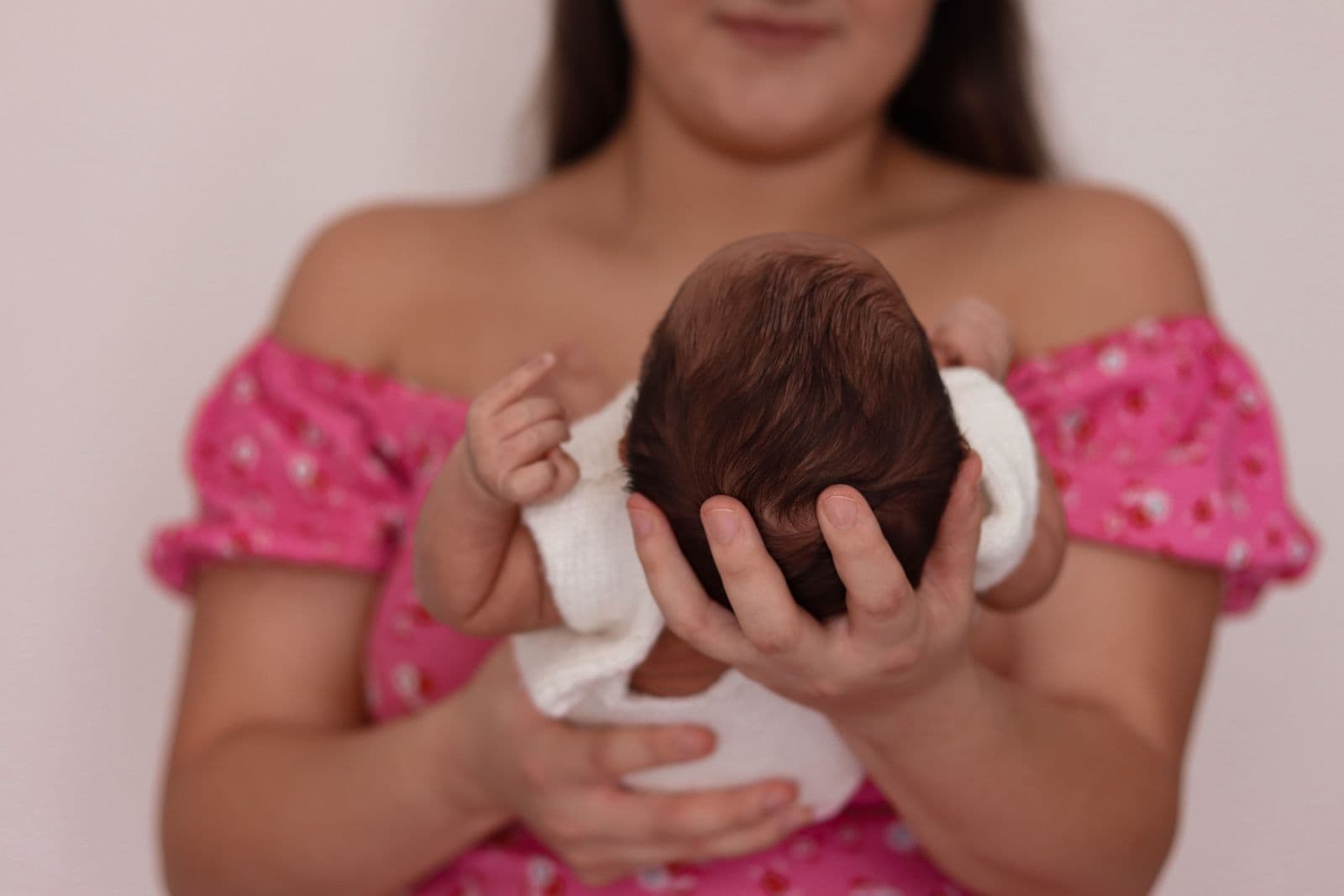
Your baby this week
Your baby is here, and everything is so new — the lights, the sounds, your smell. Your baby can only see about 20–30cm clearly, which is perfect because that's how far your face is when you hold them. Your baby recognizes your voice from the months inside you, and it's their favorite sound. Your baby needs to eat every 2–3 hours and sleeps a lot. Skin-to-skin contact with you is the best thing in your baby's world right now.
Your recovery this week
Your body has just done something incredible. Vaginal bleeding (lochia) is normal and will be heaviest this week — bright red and heavy for the first few days. Uterine cramping, especially during breastfeeding, helps your uterus shrink back. Breast engorgement may begin as your milk comes in around days 3–5. Day 3 is often the hardest — sleep deprivation hits and hormones shift rapidly. Rest is not a luxury right now; it is medicine. Accept help whenever it is offered so you can focus on healing and feeding. You are not failing. You are recovering.
Common symptoms this week
Every recovery is different — you may notice some of these, all of them, or none at all. Be gentle with yourself.
- Heavy bright-red bleeding (lochia)
- Cramping as the uterus shrinks
- Breast engorgement as milk arrives
- Deep exhaustion and broken sleep
- Big hormonal shifts
This week’s checklist
- Rest whenever baby sleeps — recovery is your priority
- Stay well hydrated — keep a water bottle within reach at all times
- Take pain medications as prescribed (safe while breastfeeding)
- Eat protein-rich, easily digestible meals
- Accept help with meals, laundry, and chores
- BCG vaccine and OPV-0 (oral polio) at birth — usually given before hospital discharge
- Attend paediatrician visit within 3–5 days of discharge
What’s normal this week
Most of what you’re feeling is your body healing exactly as it should — the everyday aches and changes don’t need a call. The signs below are the rare exceptions: noticing one doesn’t mean something’s wrong, just that it’s worth a quick check.
When to call your doctor
- Heavy bleeding — soaking more than 1 pad per hour
- Fever above 38°C (100.4°F)
- Foul-smelling vaginal discharge
- Redness, swelling, or discharge from C-section incision or tear site
This guide offers general information for typical postpartum recovery and is not a substitute for personalised medical advice. Always follow your doctor’s guidance for you and your baby.
Frequently asked questions
What is normal 1 week postpartum?
Around 1 week after delivery, it is common to experience heavy bright-red bleeding (lochia), cramping as the uterus shrinks, breast engorgement as milk arrives, deep exhaustion and broken sleep, big hormonal shifts. Every recovery is different.
What happens 1 week after delivery?
Your body has just done something incredible. Vaginal bleeding (lochia) is normal and will be heaviest this week — bright red and heavy for the first few days.
When should I call my doctor after delivery?
Call your doctor if you notice heavy bleeding — soaking more than 1 pad per hour; fever above 38°C (100.4°F); foul-smelling vaginal discharge; redness, swelling, or discharge from C-section incision or tear site.
Last updated June 2026
References
Ovyacare’s guidance is written in-house and aligned with leading medical authorities: